My Own Personal Warp God
Warhammer, egregores, and longing-as-labor
Drawing on decades of experience with Warhammer 40,000, this essay argues that the game is best understood as an egregore — a collective entity sustained by the private, unpaid imaginative labor of those who inhabit it — and that writing it off as a mere subculture or fandom misses the most interesting aspects of how it works. From there, it turns to another shared system that runs on vivid aesthetics and unseen longing in narrower, more dangerous terms: the online martyrology of accelerationist violence.
Warhammer 40,000 invaded my mind on an overcast summer day in 2005. My mom was out running errands in search of more old, creaky antique furniture for our equally antique house, and I’d been dragged along to keep me from spending another afternoon fused to the family desktop. By then, I was already deep into titles like Star Wars Battlefront, which left me climbing the walls for anything blaster-shaped when offline. It was here, walking down the literal Main Street of Amesbury, Massachusetts, that I first noticed the sign for my local hobby store: the Toy Soldier.
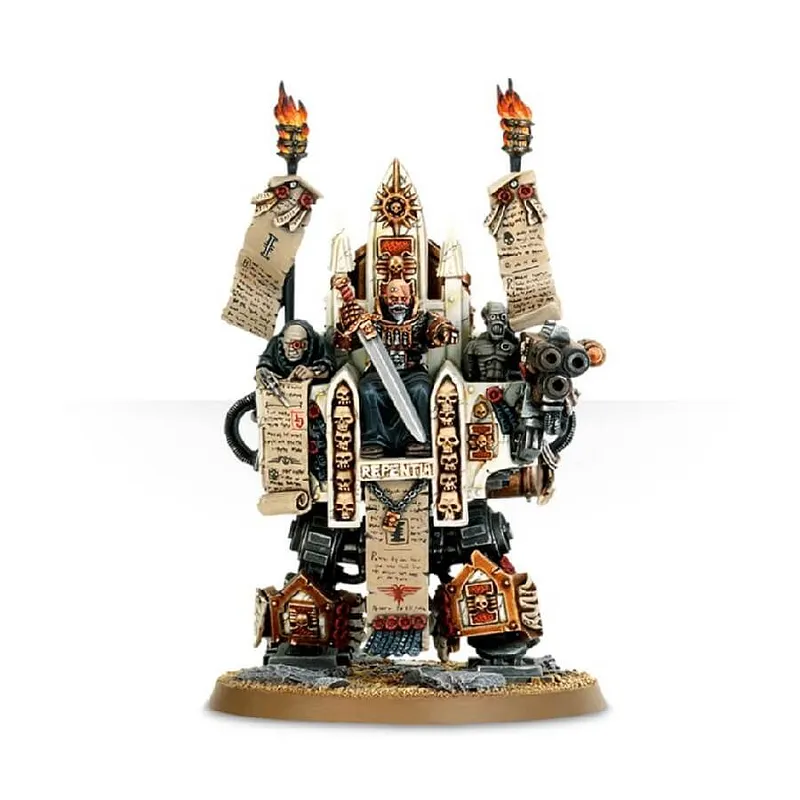
At age ten, the first word on that sign was enough to pull me closer. Was I looking at a “Legos and GI Joes” toy store or a “handmade wooden punishments for crunchy Unitarian kids” toy store? What I found was a multilevel display case filled with plastic figurines, each painted with all the autistic intensity of 1-inch illuminated manuscripts. As a longtime lover of museum dioramas and the owner of many action figures, I was drawn in on two fronts; I’d never seen a diorama piece with such vivid colors or an action figure with such intricate detail. Then my eyes landed on a figure I now know as Lord Inquisitor Fyodor Karamazov on his Throne of Judgment.
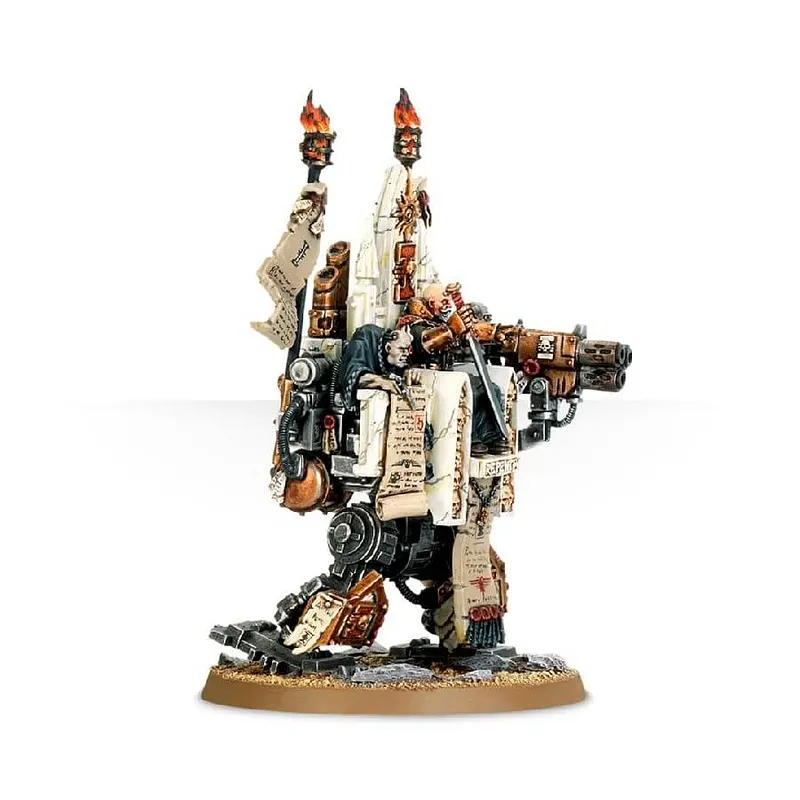
The titular throne is a bipedal walker, part AT-ST and part church lectern, crewed by the Lord Inquisitor and two attendants covered in crudely grafted augmentations. These are servitors, former convicts surgically altered into mindless cyborg slaves, and the closest thing to robots in a world where AI has been banned for well over ten thousand years. One wields a triple-barrelled energy weapon, and the other records Karamazov’s real-time battlefield judgments on a flowing scroll. The Lord Inquisitor sits between them, resting one hand on an ornate greatsword. Because the mech puts him much too far off the ground to actually use this weapon, it’s mostly there because it’s cool.
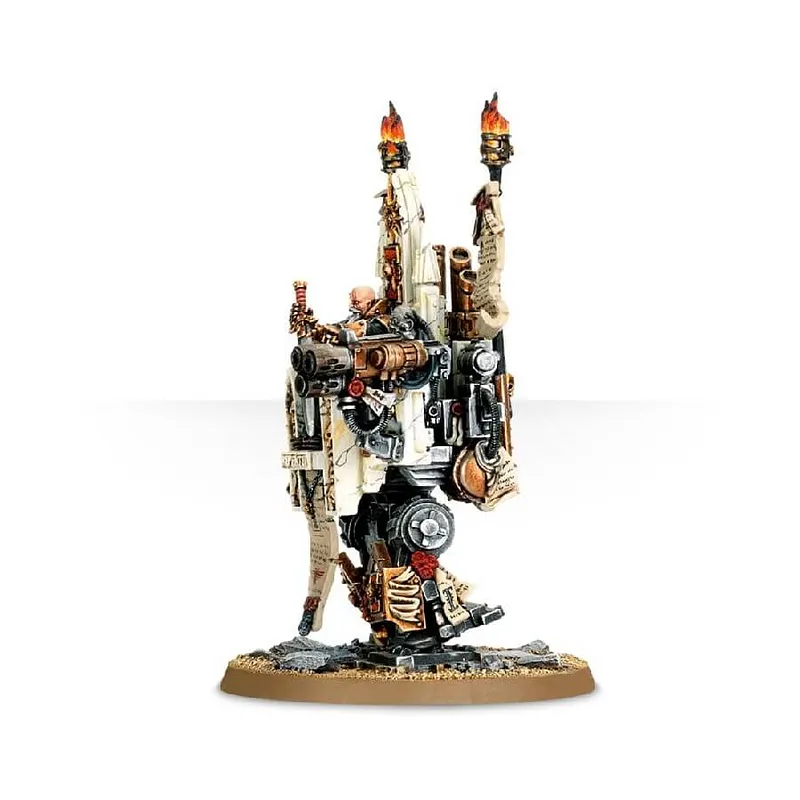
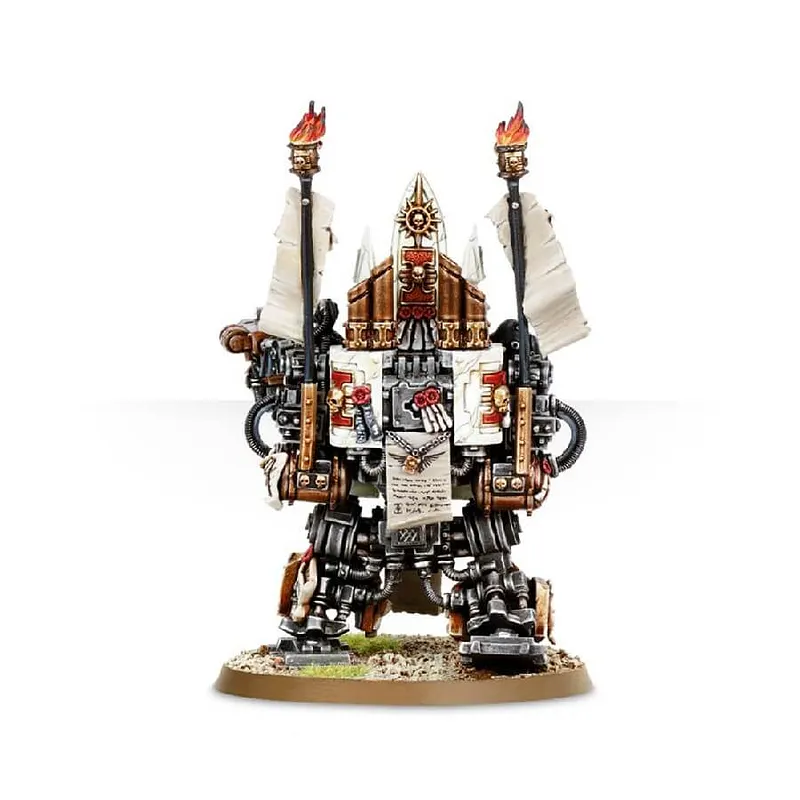
At a time when my idea of the capital-F Future still came from the frictionless chrome spaceships of the Star Wars prequels and immediately-post-Y2K consumer electronics like my mom’s clear plastic iMac, this ran counter to everything I thought I knew. Too high-tech for fantasy and too medieval for sci-fi, it seemed to point toward the existence of a secret, third thing. As I noticed the vehicles on the level below Karamazov’s mech, including a main battle tank with a pipe organ that doubled as a missile launcher, my initial curiosity began boiling over into something stronger.
I want to be precise about what that feeling was, because everything else after this depends on it. It wasn’t fandom; I wouldn’t see or hear the phrase “Warhammer 40,000” for another few minutes. It also wasn’t simple covetousness, even if I’ve never coveted any single set of items more than all those figurines. I was ten years old, bored, and ready to be swept up in something bigger than my day-to-day life—and in that moment, face up against the glass, I felt like I’d brushed against a single tendril of something vast, shocking, and incomprehensible. With just one glimpse, I was longing to see more. Fortunately, by this point, I’d put in enough antique store time to talk my mom into a pit stop.
Back then, the front half of the Toy Soldier was split into two U-shaped alcoves overflowing with eye-catching boxes, rulebooks and codexes. Due to the crimson trim on every bit of 2000s Warhammer Fantasy packaging—the medieval swords-and-sorcery branch of the Warhammer family, and technically the oldest child—one side was wall-to-wall red. The other, reserved for Warhammer 40,000, was a kind of dark-future military-ecclesiastical gray-green. This was helpfully decoded by the store’s sole cashier, a central casting neckbeard who was only too happy to proselytize for the benefit of a fresh, visibly receptive recruit. Whatever that guy got paid, it wasn’t enough.
I spent a full hour grilling the cashier about every item in the store, and each of his answers crackled with juicy in-universe vocab that only inspired more questions. Psykers. Necrons. Eldar. Every word entered my 10-year-old mind like a frost-resistant GMO seed of meaning, and every glimpse around the room at all the box art just added more fertilizer. Warhammer 40,000 is a machine for putting people into this exact headspace. From my mom’s perspective, our Q&A probably scanned like the earliest stages of cult induction.
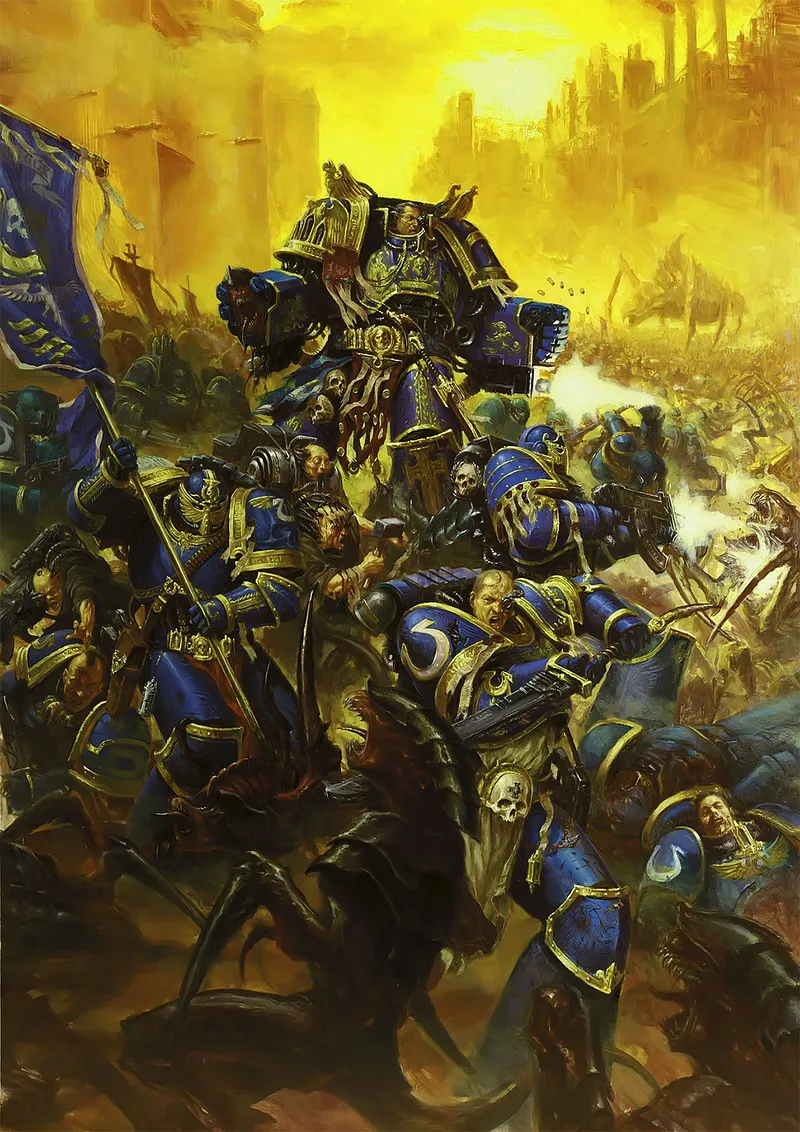
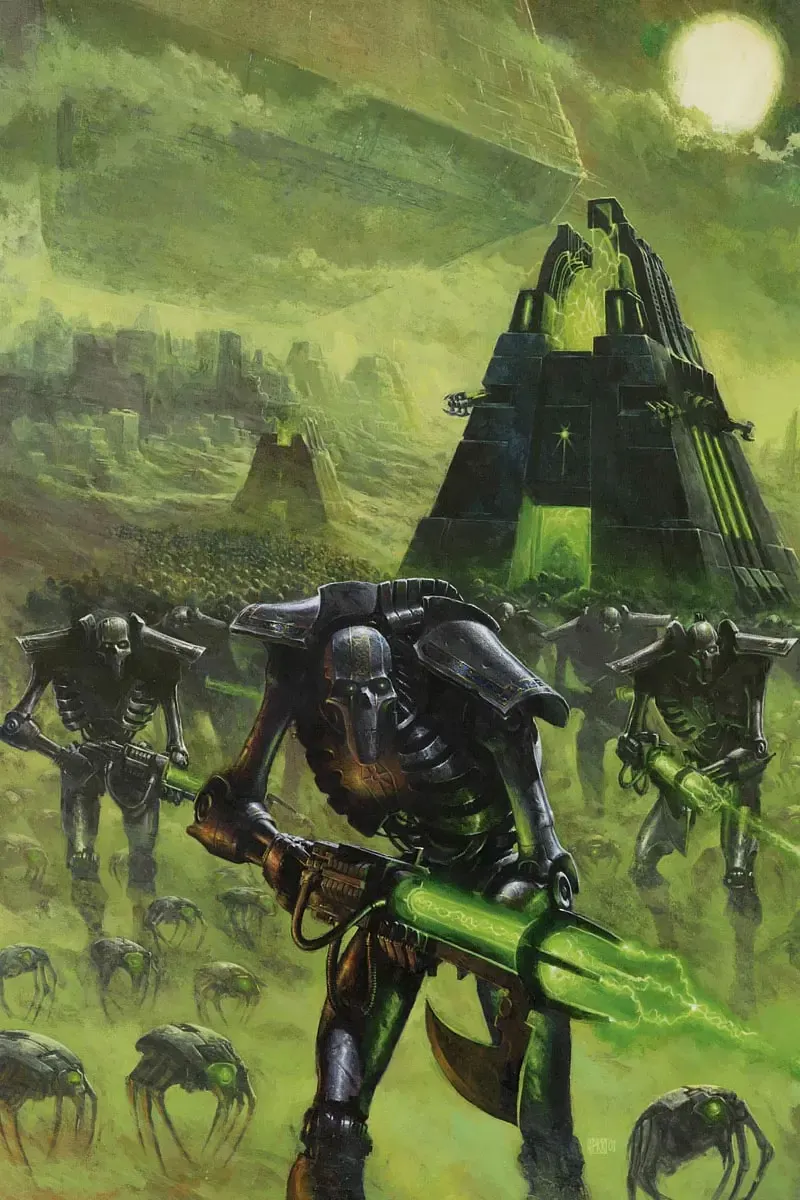
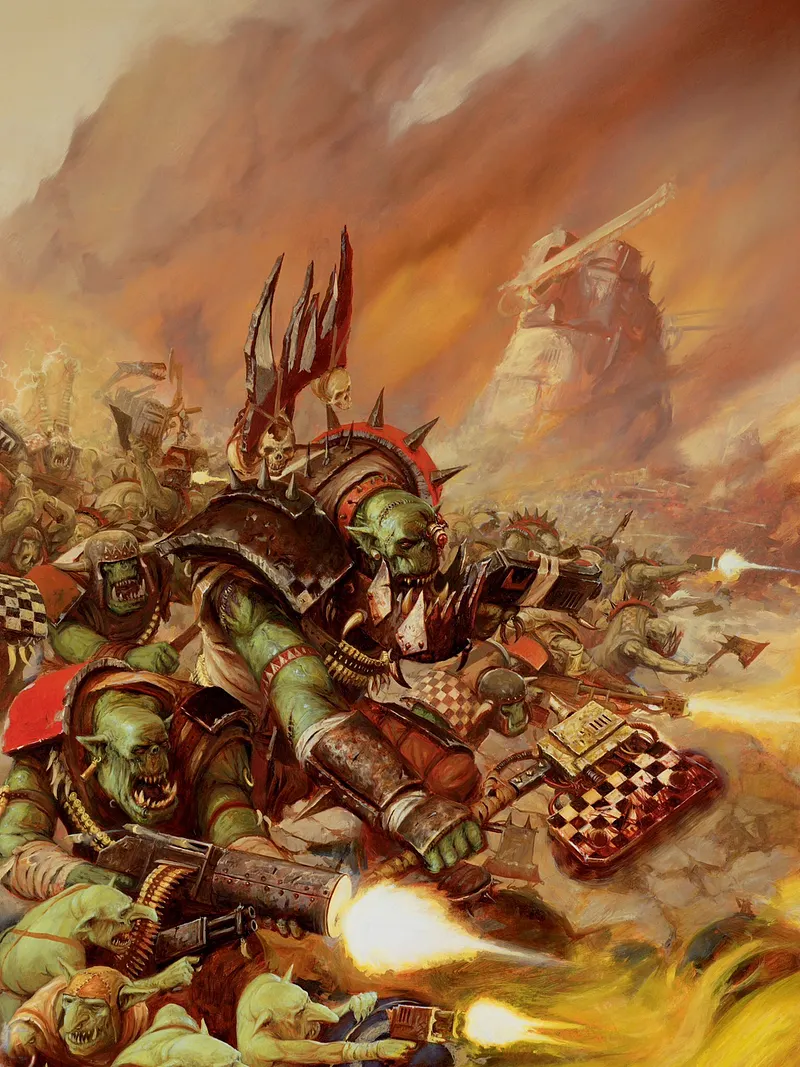
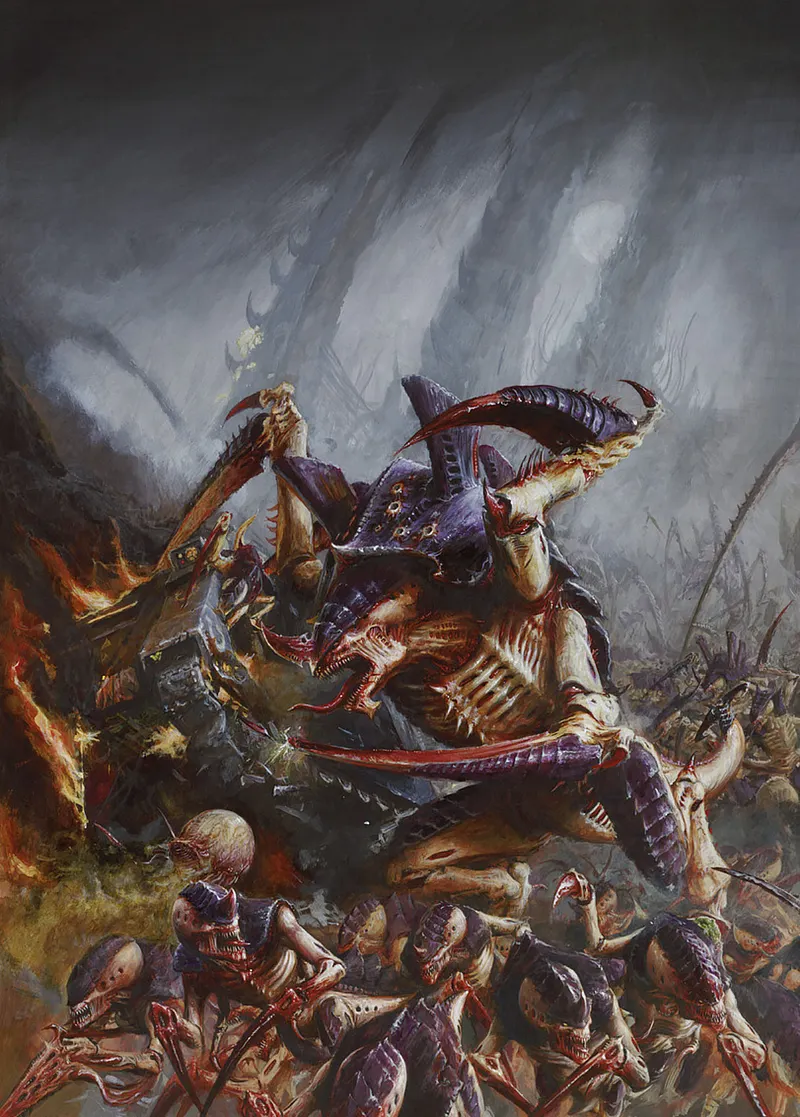
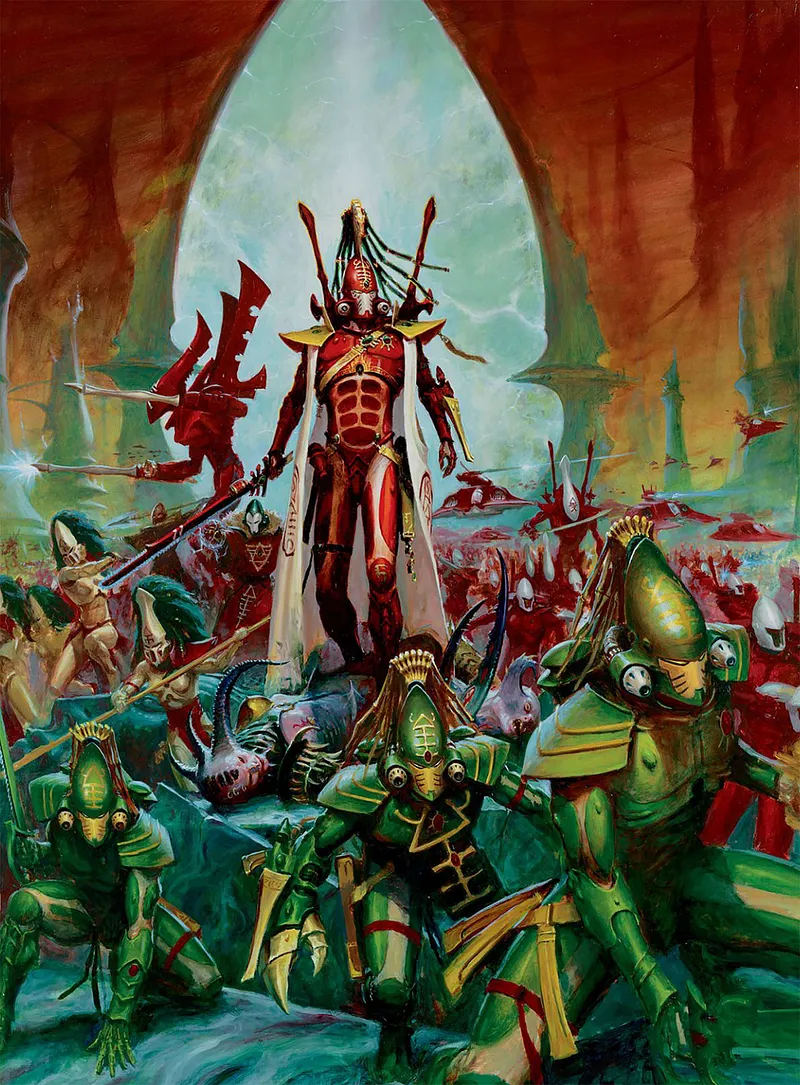
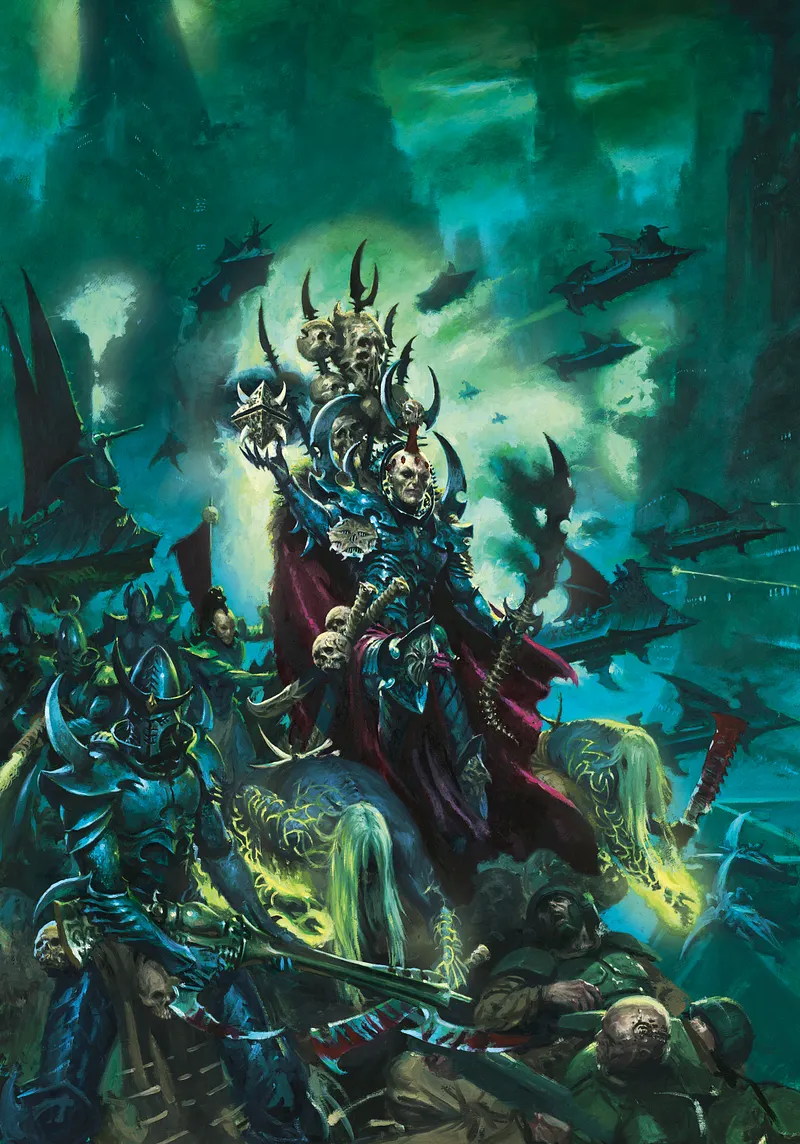
Two decades later, no Gulf States architect has dreamed up a megastructure tall enough to fit that cashier’s version of an elevator pitch. Like any true Warhammer devotee, he knew that to explain Psykers, you have to explain the Warp. To explain the Necrons, you have to explain the Old Ones and the War in Heaven. To explain the Eldar, you also have to explain the Dark Eldar, and the birth of the dark god Slaanesh—this last part somewhat euphemistically, given the age of his audience. I would become a fan of at least a dozen other fictional universes over the next few years, each with comparably elaborate art and dense lore, but nothing has ever captured my imagination quite like 40k. The more I saw and heard, the more I realized I still wasn’t seeing.
How Warhammer spreads
Thirty minutes into my induction, my mom acknowledged the elephant in the room: if I were to get into this game, what would I need to buy? Banking on my ability to upsell her better than he could, the cashier directed his answer toward me—and while I don’t remember the exact price tag that finally dragged his sales pitch back to Earth, it was an emphatic “too much” in 10-year-old allowance money. For everything the cashier gave me that day, he failed to move any product.
I spent the next few months in a state of even more intense longing: poring over 40k fan wikis, saving galleries of fan art, making wish lists of armies I’d buy if I had the money, and reliably werewolfing into the most annoying guy alive whenever any other sci-fi or fantasy title came up at school—turning any mention of Halo or Star Wars into a lecture on why 40k did genetically-engineered super soldiers and space magic better. All my memories of that time are strangely fond, but it didn’t do Warhammer’s parent company, Games Workshop, any favors.
This extended gestation period turned my eventual introduction to the real game into a series of letdowns. Even when I saved up enough to buy a box of Necrons, I could only afford a single 10-figure squadron. Painting them was another reality check—discovering, in real time, that I lacked the hand-eye coordination to do anything like the highlight reel I’d seen at the store. But the thing that really took the air out of the whole thing was when I brought them back to actually play.
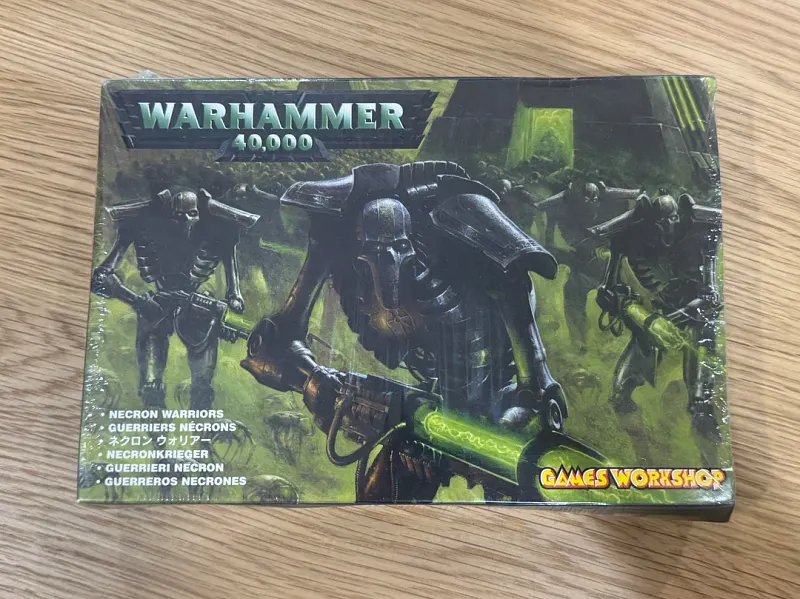
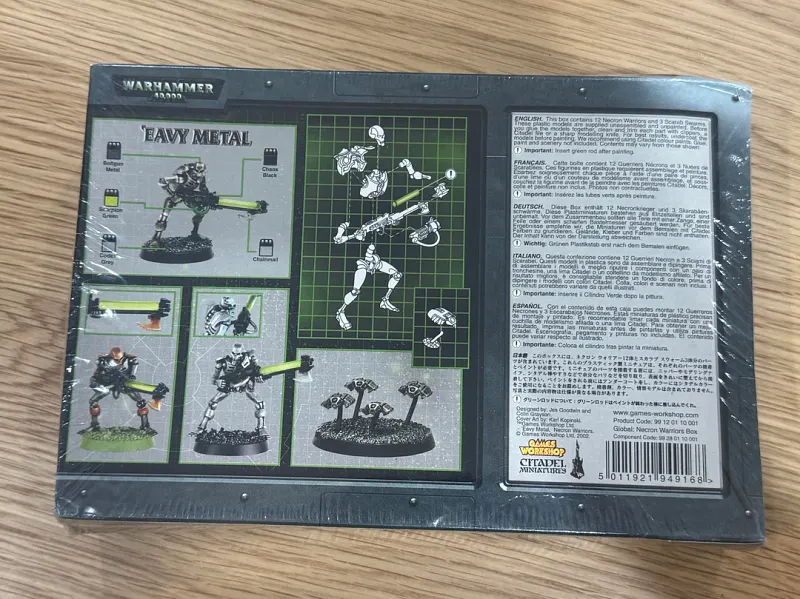
To their credit, the Toy Soldier’s regulars were just as welcoming as that initial cashier. Returning to the store, finger-painted figurines in hand, I was quickly paired up with a guy who coached me through my first match—basically telling me every move to make. His Orks looked like museum pieces next to my Necron Warriors, and to maintain some pretense of treating me like a peer, he didn’t even let me win. But even if I’d awakened some innate, Napoleonic tactical genius and beaten him right off the bat, I don’t think it would have made me want to go back for more. Compared to the vibrant cosmology knitting itself together in my head, the clerical pen and paper realities of the tabletop game felt like checkers with extra steps—and if the universe I’d glimpsed in all the box art in the front of the store was supposed to find any outlet in the harshly-lit shared gaming room out back, I had no luck seeing how. This is still the only battle my Necron Warriors have ever fought.
Maybe I’d have seen things differently if my first experience with Warhammer’s figurines had been on a tabletop instead of under glass, or if I’d had a more immediate social connection to the game and my opponents. No matter how many times I tried to bring it up, 40k never resonated with any of my real-world middle school friends—and even if they’d taken to it as I’d hoped, I imagine the cost of entry would have hit them the same way it hit me. The Toy Soldier was also a solid thirty-minute drive from my childhood home. But even for more conventionally active fans, the real magic of 40k rarely comes down to gameplay.
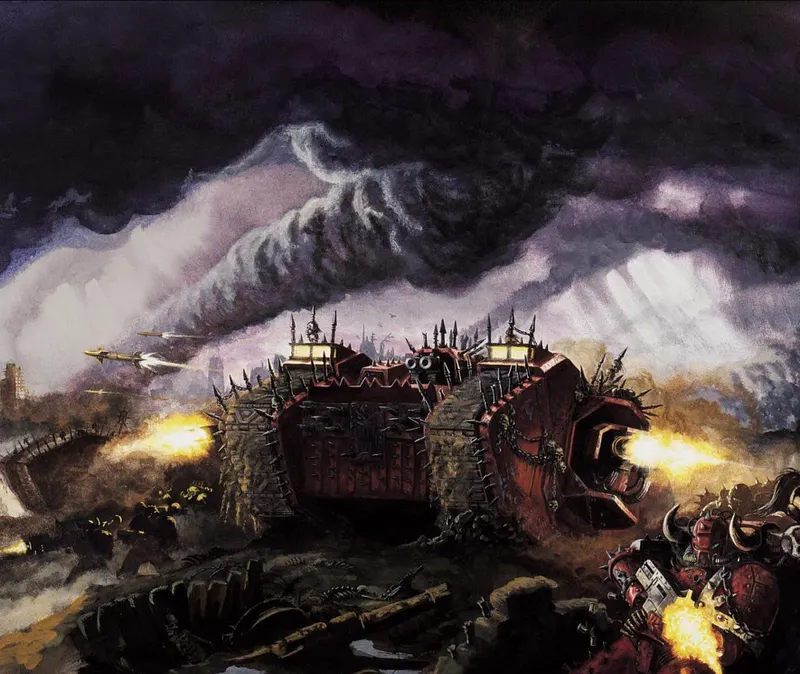
Cool paint jobs aside, Warhammer 40,000, the tabletop wargame, is the least interesting thing about Warhammer 40,000, the fictional universe. Most fans seem to agree: spend five minutes on 4chan’s /tg/ or the 40k subreddit, and you’ll find that any posts about tactics and rulebook updates are overshadowed by fan art and lore discussion. The Warhammer that inspires people to design custom heraldry for their armies and spend hours arguing with digital strangers is all about imagination.
For all the fictional universes I’ve ever obsessed over, I’ve always felt that 40k is uniquely suited to fuel the teenage imagination because of the way it rejects the binary between sci-fi and fantasy. Originally pitched as a spacefaring spinoff of Warhammer Fantasy, it’s one of the few settings that draws from The Lord Of The Rings, Dune, Star Trek, and Alien in equal measure. There are elves, orks, aliens, cyborgs, knights, monks, energy weapons, faster-than-light travel, demons and inquisitors, often all in the same story. In some solar systems, it’s possible to have a feudal world stuck in the Middle Ages orbiting right next to a sprawling, planet-wide hive city. While I didn’t realize it at the time, this was exemplified by Karamazov’s sword: totally superfluous, but undeniably cool. Such is the operating logic of Warhammer: “yes, and.”
Star Wars and 40k are from the same generation of “science fantasy”; they both operate at similar scales with rabid fanbases and tie-in content to match. But if 40k lore is an unlocked toolbox, Star Wars lore often feels more like a set of restrictive zoning laws. Most Star Wars stories tend to focus on the same handful of characters and locations—and it makes a supposedly immense galaxy feel strangely small. Conversely, in 40k, it’s rare to see the same character twice across any two stories. The universe is just too big to be boiled down to one desert planet or a single family of space wizards.
The difference comes down to how they started. While Star Wars was forced to grow out of one big story, Warhammer was explicitly conceived as a system for creating more stories. The chain of events that reduced 40k’s Imperium of Man into its current, stagnant state is a background blurb for the actual game. The Emperor of Mankind has been stuck in a golden life-support chair for ten thousand years, and people have been trying and largely failing to interpret his will ever since. The main story is frozen, the main character is conspicuously absent, and that leaves you free to invent your own. In other words, if Star Wars is prescriptive, Warhammer is generative; one tells you exactly what to care about, and the other lets you figure it out for yourself. For 10-year-old-me, this was hypnotizing stuff—and while I’ve forgotten big chunks of Return of the Jedi even after a dozen viewings, I can still remember every piece of box art from that first day.
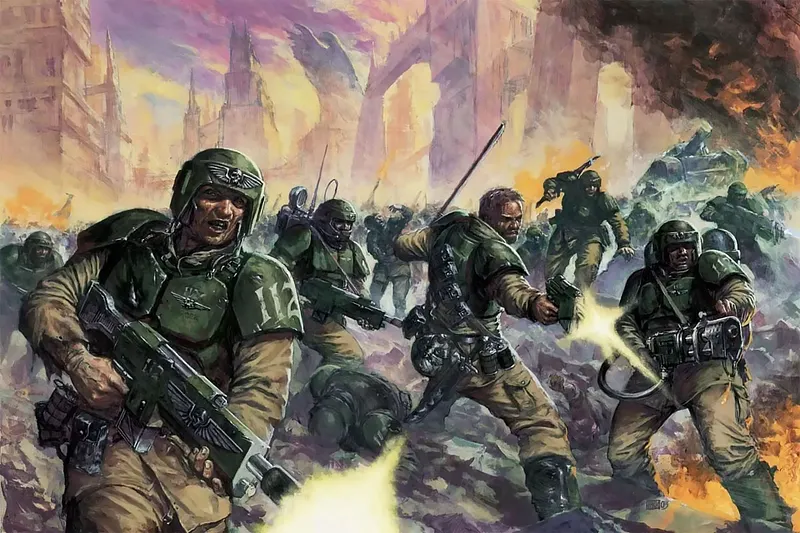
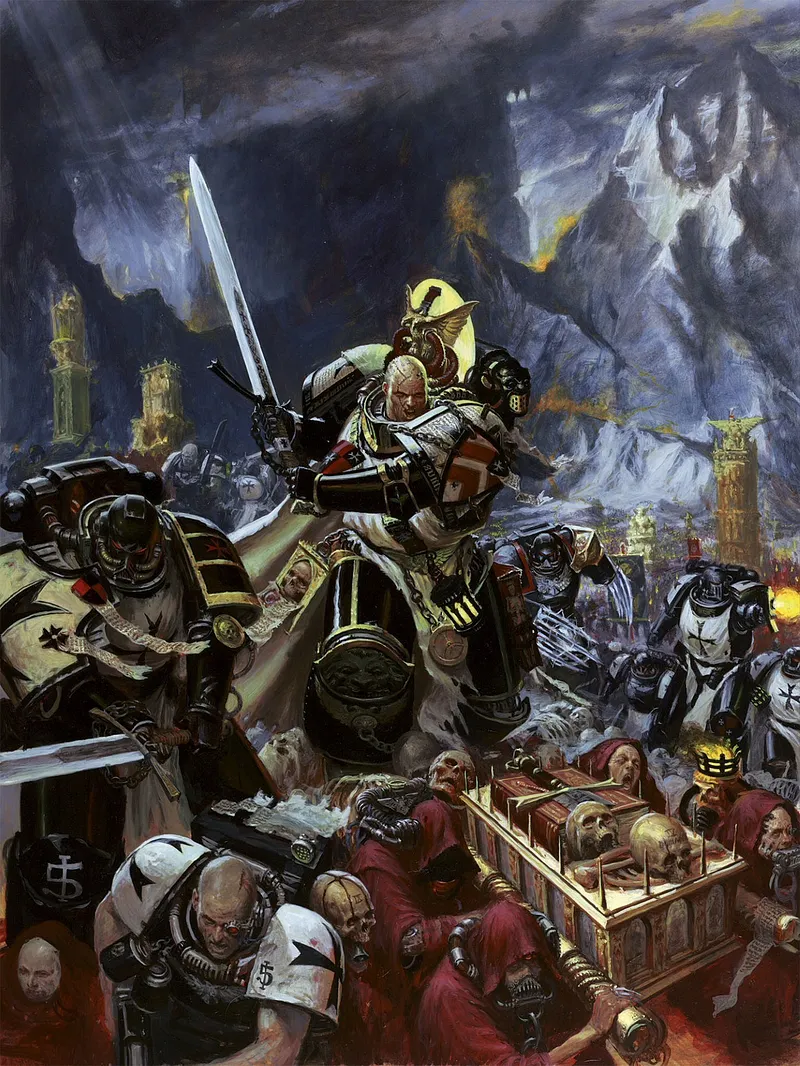
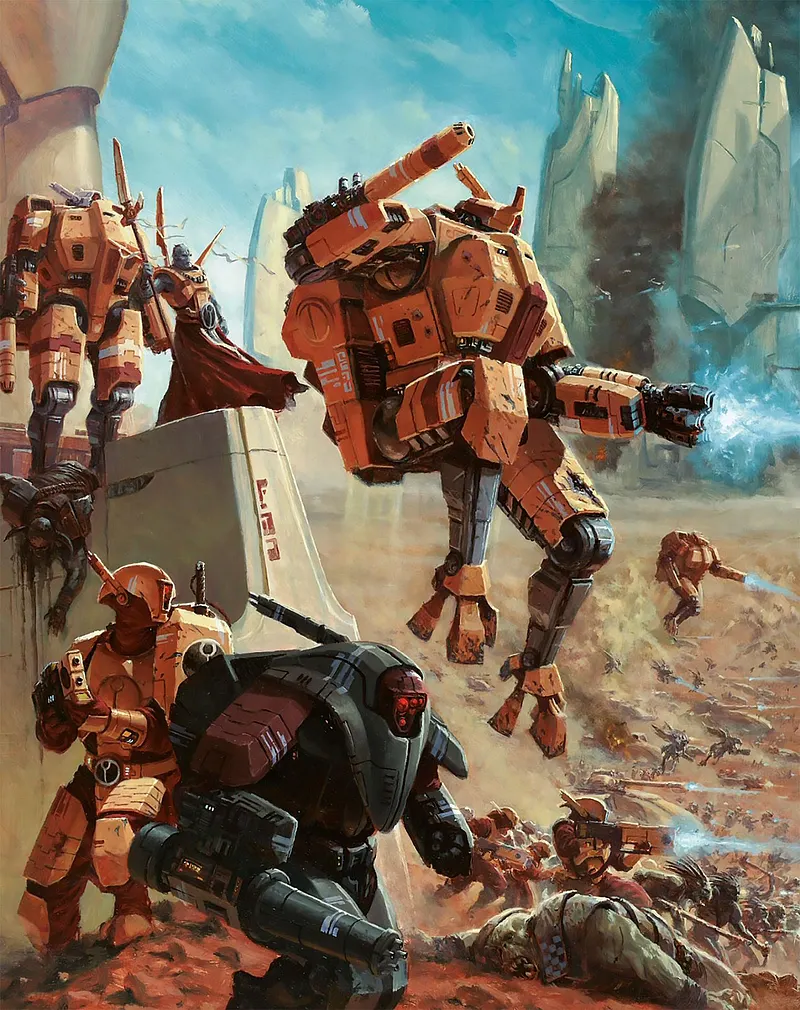
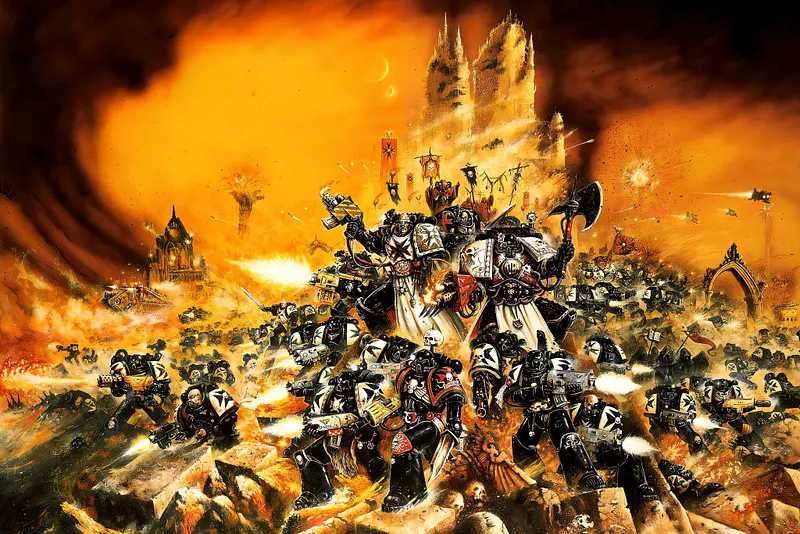
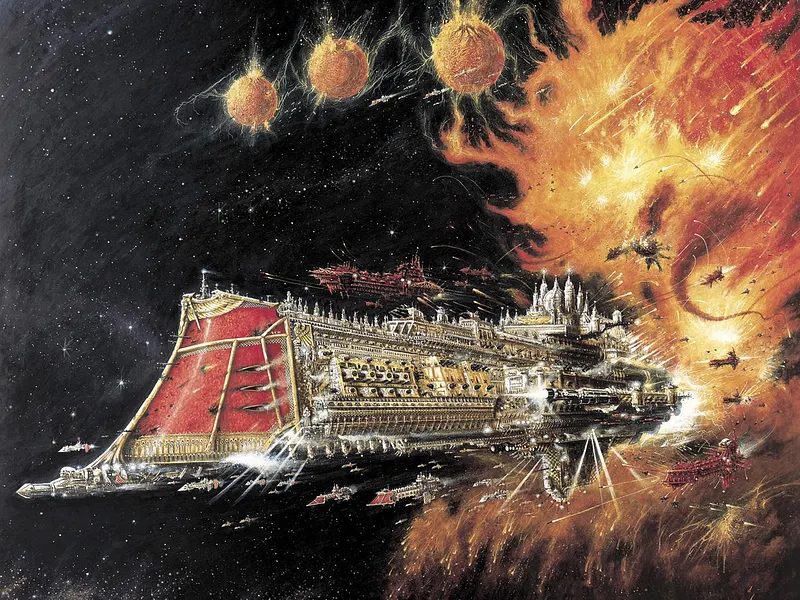
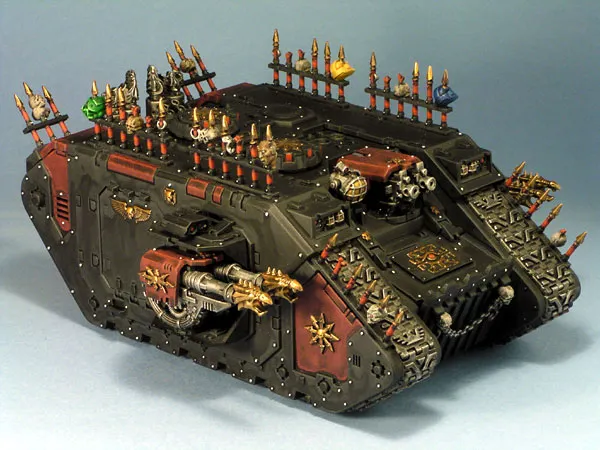
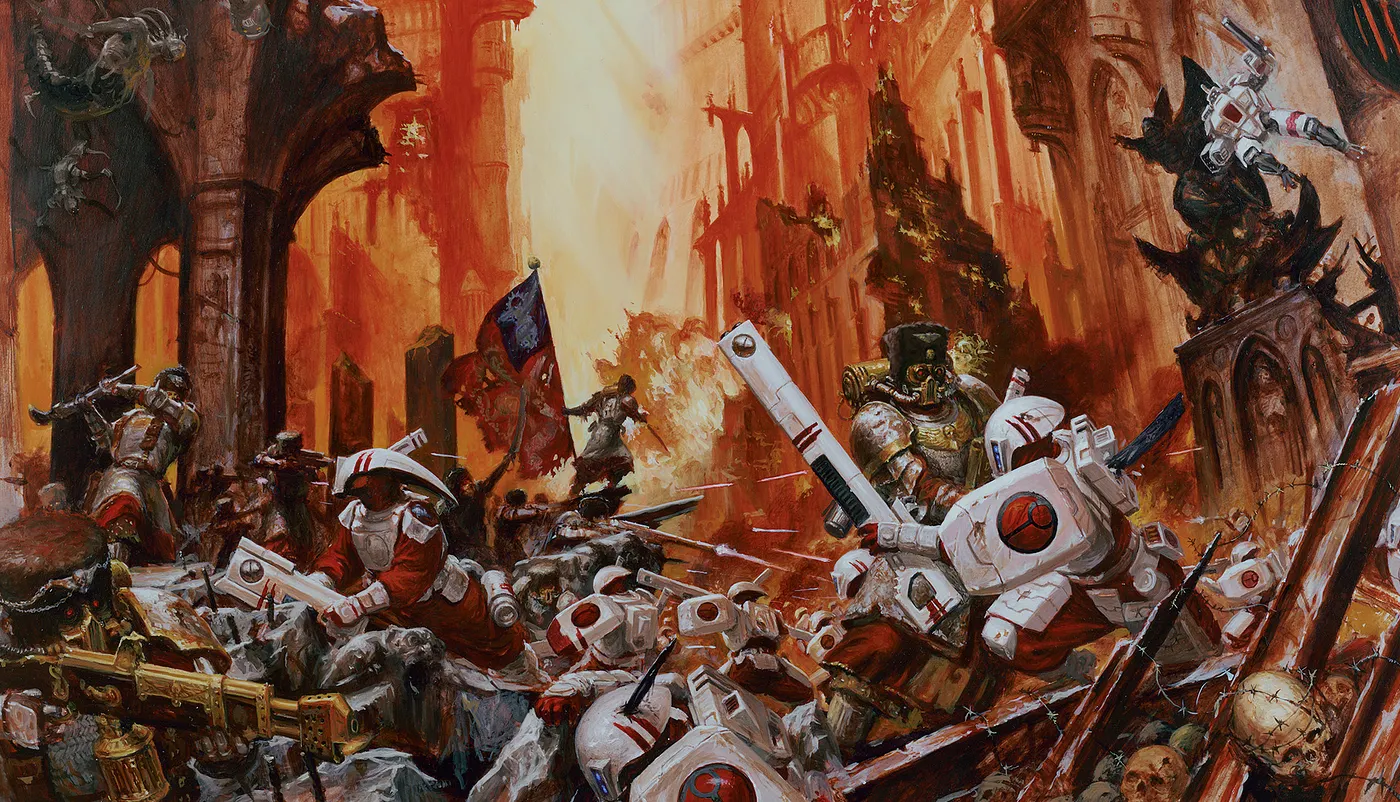
None of these images answered any of my questions, especially since their fantastical setups rarely matched the miniatures they were designed to sell. Not being able to take any of them home with me didn’t help, nor did my parents’ barring me from installing Warhammer 40,000: Dawn of War on the family desktop for another ten months. Still, even now, in the age of titles like Rogue Trader, I’ve never found a 40k game that has sincerely kept my attention for more than four or five weeks.
What I’m describing here isn’t unique to Warhammer. Scarcity, accidental or intentional, is one of the most reliable fuels for collective imagination—and the systems that spread the fastest are the ones that encourage the most active individual participation. This is visible everywhere from H.P. Lovecraft’s Cthulhu mythos—much of which was only fleshed out by writers in his circle after his death in 1937—to the SCP Foundation and the burgeoning cottage industry of Dark Souls lore YouTube channels, places where a community assumes the responsibility of generating or interpreting a world for themselves, often because no single, definitive version exists.
It’s not absent from more serious real-world causes, either. Modern conspiracy theories like QAnon thrive because they’re incomplete. Every cryptic Q-drop provides the “breadcrumbs,” but believers don’t just follow the trail Hansel-and-Gretel-style to one specific conclusion. The “baking”—combining those crumbs together into a narrative that makes sense—is up to you. This leads people to develop a stake in the project beyond merely regurgitating other people’s ideas—the “own” in “do your own research” has more than one meaning. Warhammer’s strange achievement is harnessing this phenomenon while presenting countless examples of it within its own universe.
On egregores
Warhammer doesn’t officially have magic, but it does have the Warp: an uncontrollable parallel dimension of pure psychic energy. Warp-sensitive individuals called psykers use it as a conduit for psychic powers (read: magic), and many spacefaring civilizations send their starships through it as a shortcut to faster-than-light travel (read: magic wormholes). The trade-off is that the Warp is also home to countless malevolent nonmaterial entities. Untrained psykers risk tearing a demon-spawning hole in reality every time they tap into it, and any ship that tries taking a shortcut through it has a not-insignificant chance of never coming back out. However, just as the denizens of Warhammer’s universe depend on the Warp, every entity in the Warp depends on them.
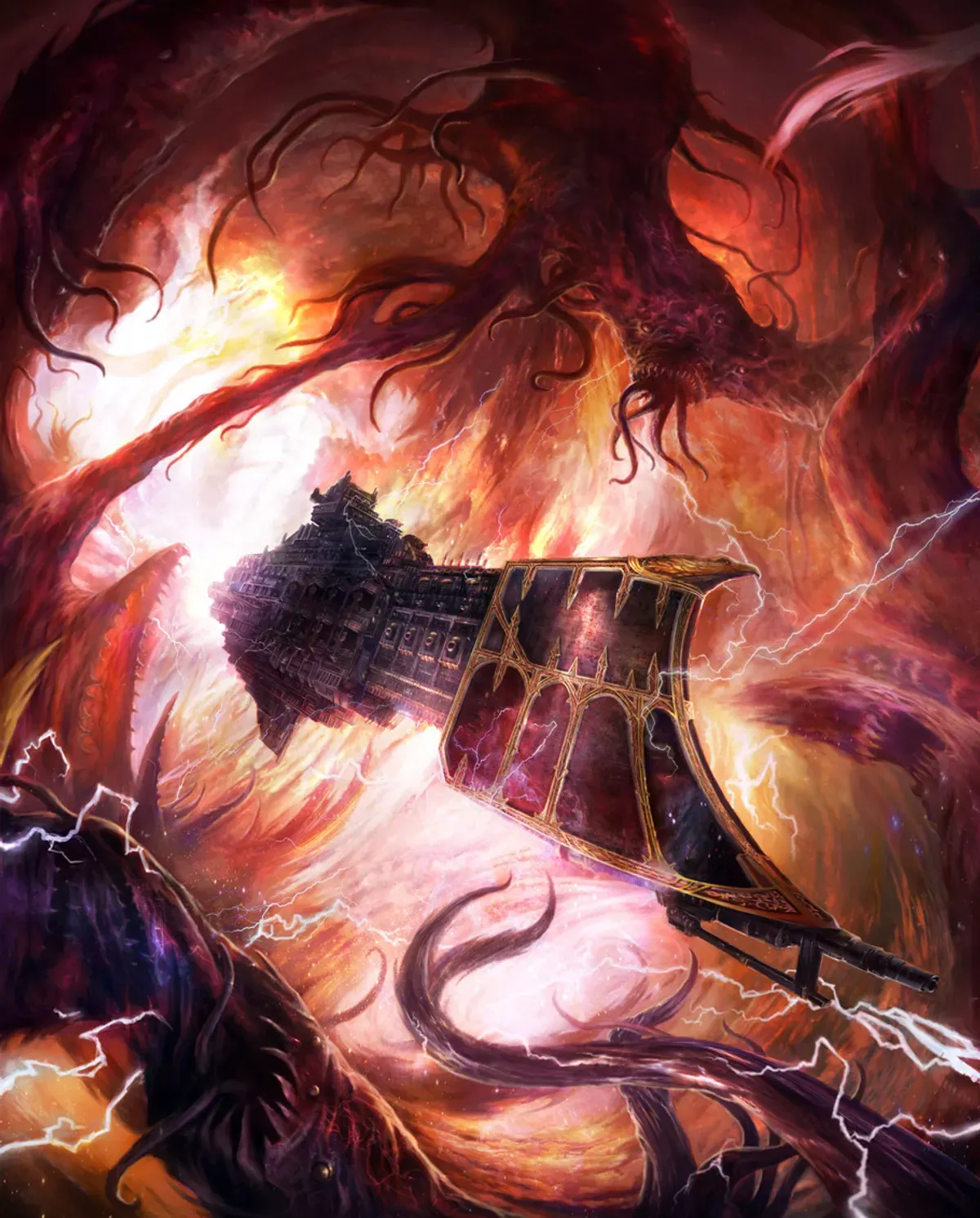
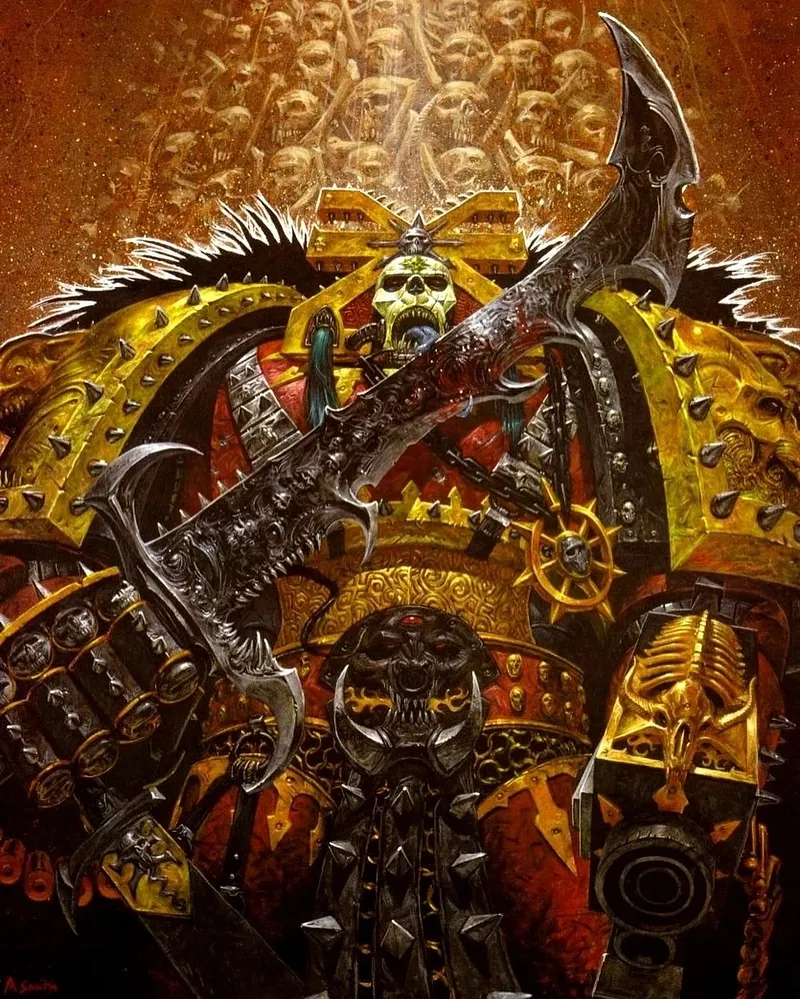
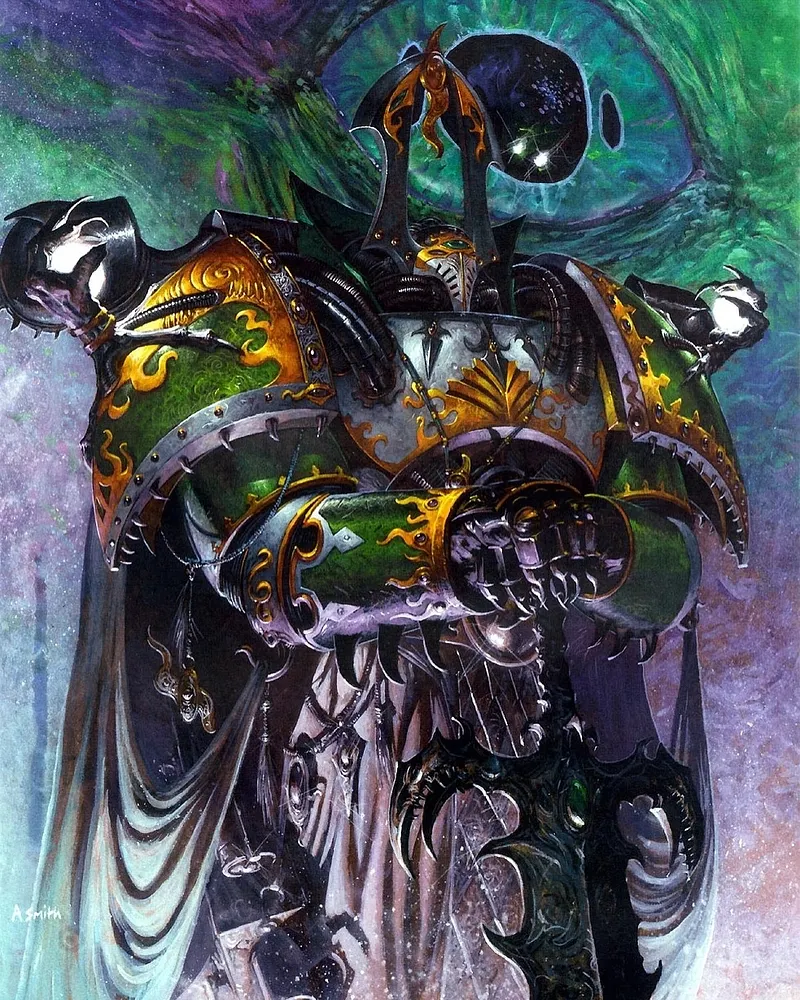
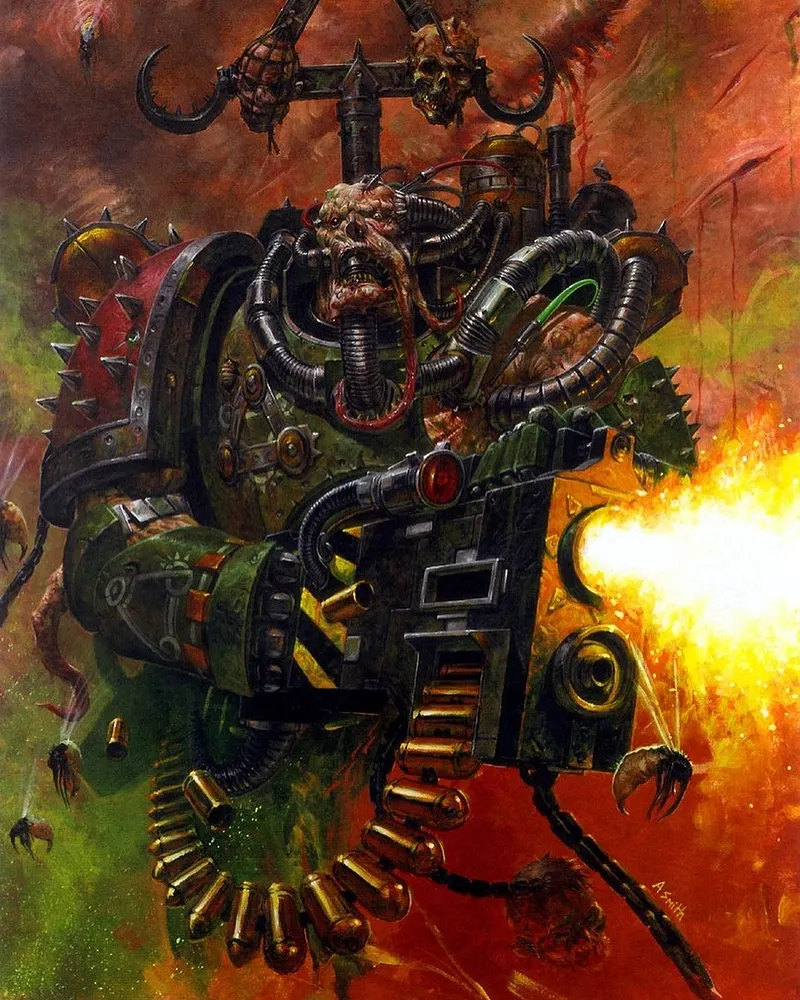
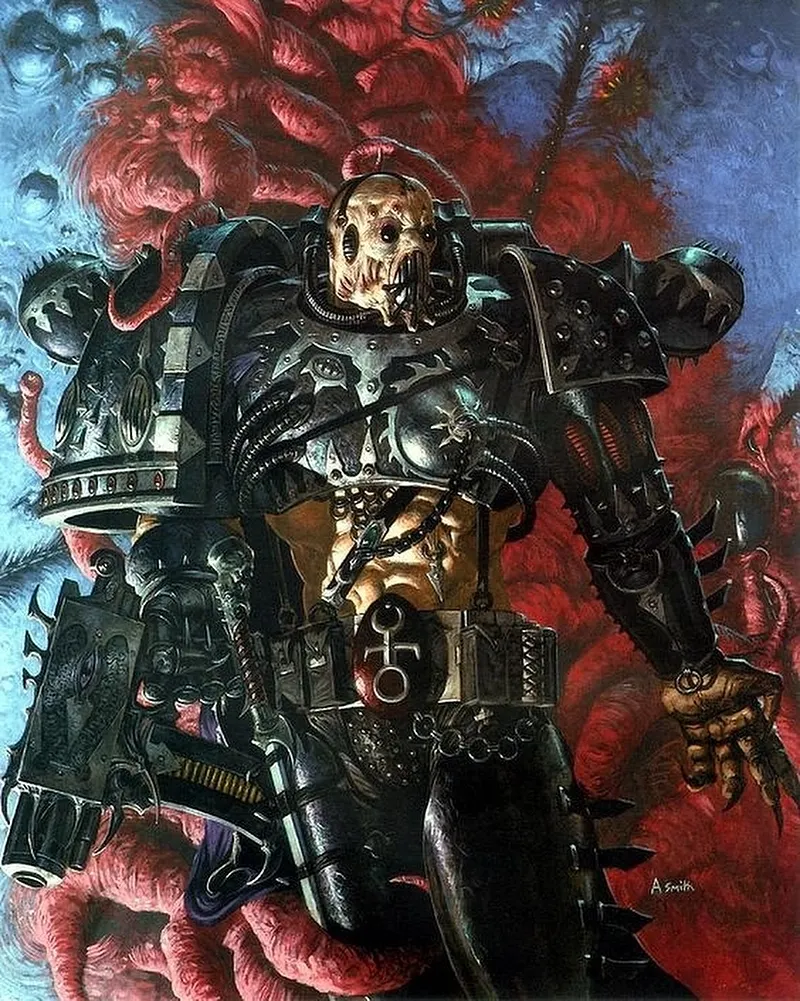
The Warp’s apex predators are the four gods of chaos: sentient psychic storms fueled by the negative emotions of trillions of living souls. Khorne, god of blood, war and wrath, feeds on hate and anger. Tzeentch, god of change, sorcery, and knowledge, feeds on ambition and the desire for advancement. Nurgle, god of disease, decay and rebirth, feeds on despair and the fear of death. Slaanesh, god of pleasure, pain and excess, feeds on lust, pride and self-indulgence. Much of Warhammer’s backstory revolves around the Imperium of Man’s efforts to fight back against these mega-thoughtforms, and Inquisitors like Fyodor Karamazov are charged with rooting out and purging any humans who succumb to their influence. The chaos gods are more than simple one-way tides of destruction or spiritual Great Pacific Garbage Patches, though. Each one has its own unique designs on the material world, far beyond the sum of their followers’ thoughts and intentions. In Western esotericism, entities like these are known as egregores.
Every egregore works like this: when enough people invest enough effort in a shared symbolic system, that system will start to take on a life of its own and develop an internal logic that no single contributor can fully control. It will also begin to exert a pull beyond the efforts of those contributors, who may begin to find themselves defending and advocating for the system without consciously choosing to do so. The strongest systems outlive even their most influential individual adherents. This framework maps onto Khorne, Tzeentch, Nurgle and Slaanesh as well as it does onto Warhammer itself.
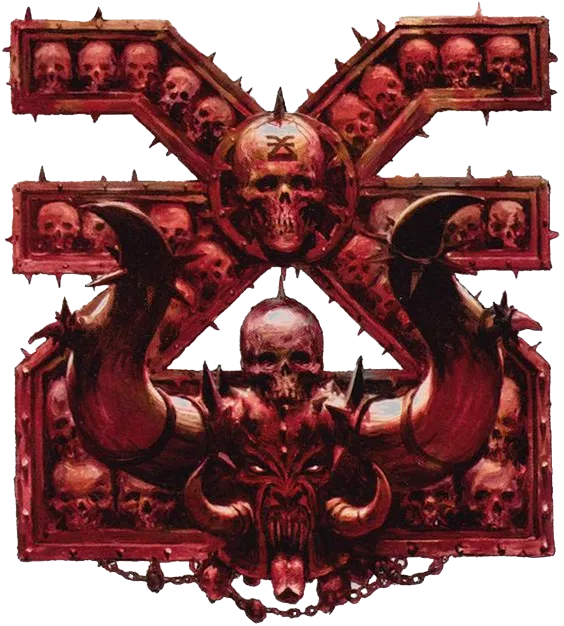
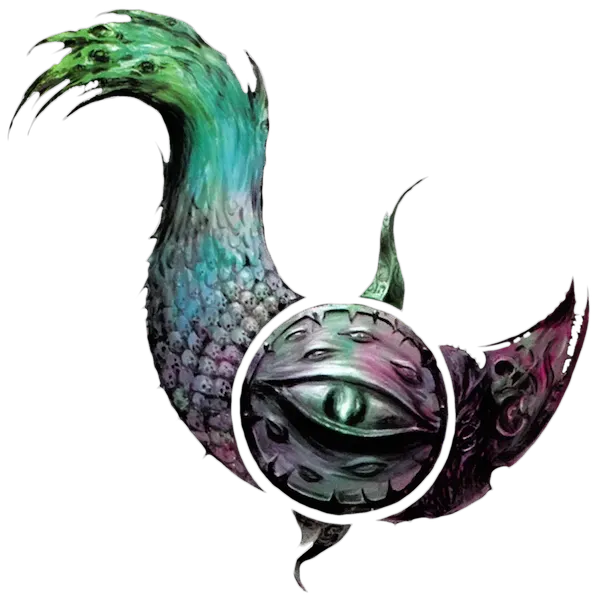
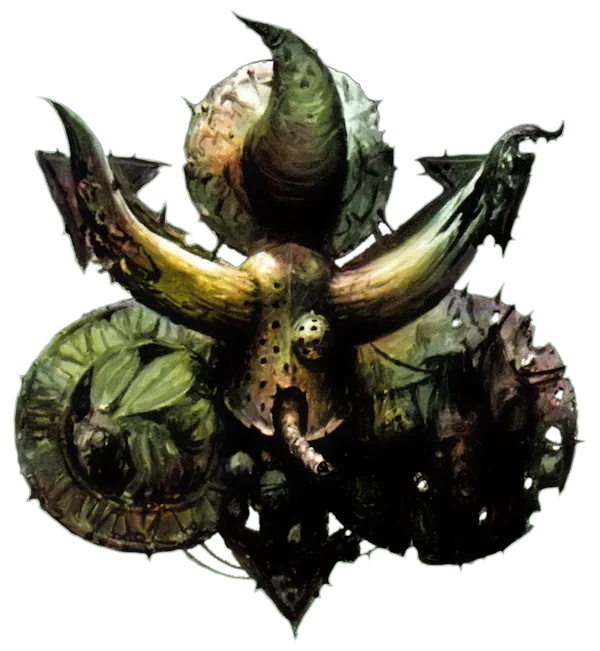
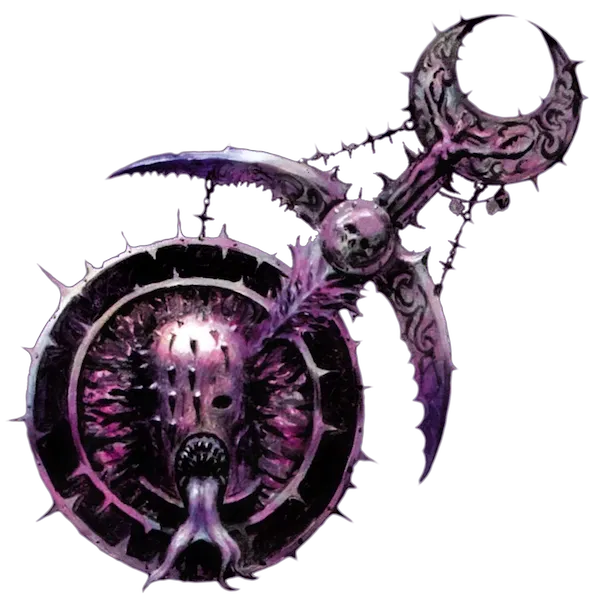
Because they rely on faith, attention, and emotion, successful real-world egregores tend to have systems for managing and controlling the energy of their believers—like shared rituals, priesthoods, and sacred texts. The Jesus of organized Christianity is an egregore, and so is capitalism. However, the gravity these kinds of egregores eventually acquire also primes their targets to approach them with caution. When you attend a Latin mass or sit in on an Econ 101 lecture, it generally comes with some level of awareness that you’re engaging with something serious. Humanity has a long history of falling for grand narratives, but there’s an equally extensive track record of people reflexively doubting them.
While Warhammer has all the hallmarks of a successful egregore, it eludes most of the skepticism and cultural antibodies that similarly systematized egregores eventually encounter. Jesus has satanists and atheists, and capitalism has anticapitalists, but there’s no “anti-Warhammer”—possibly because it doesn’t have the same inescapable hegemony as Christianity or the Stock Market, and its adherents don’t have any designs on crowding out all competing systems. And despite the thousands of hours I’ve put into Warhammer over the last 20 years, I’ve rarely thought about my commitment to it in these terms.
Many less esoteric frameworks exist to discuss concepts like these, and they’re worth mentioning here; Warhammer is also a subculture, a scene, and a fandom. It also checks many boxes of participatory ontology—the idea that a thing is partially constituted by how people engage with it, rather than existing independently and merely being represented or interpreted. For most of recent modern history, this kind of vocabulary has been well-suited to these kinds of conversations because most subcultures, scenes and fandoms were nothing but visible infrastructure like mailing lists, forums and in-person gatherings. The trouble with these models is that they don’t have any place for people whose engagement is entirely interior: the ones who spend hours of their inner lives inside something like Warhammer, but never contribute to its infrastructure of belonging in any visible way. The mechanisms by which so many people have ended up half-aware of Warhammer—never engaging, but still influenced by it—are exactly where the fandom vocabulary of zines and cons starts to break down.
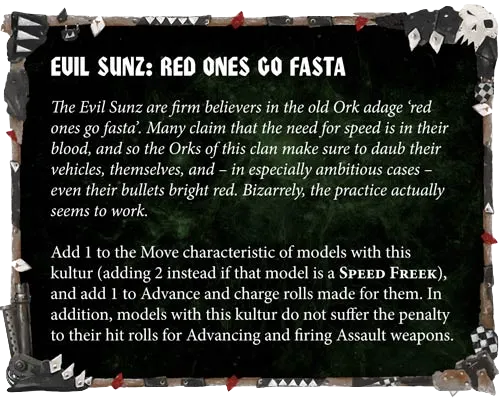
Warhammer was my first encounter with systems that exemplify this mechanic; the 40k universe is filled with egregores that constantly remind its followers what they’re dealing with. Beyond the chaos gods, the most on-the-nose example is probably the Orks: a species of dim-witted, violent, latently psychic aliens whose physically impractical technology only works because enough of them think it does. They don’t channel this belief through rituals or sacred texts; just a collective, bone-deep certainty that, for example, “red ones go faster.” And in the game, they actually do: many Ork rulebooks confirm that painting any Ork vehicle red will add an extra inch of tabletop movement. Every instance of Warhammer’s supernatural comes back to this mechanic of belief-as-power—and that mechanic offers a clear job description for believers like me.
I didn’t encounter the word “egregore” in print until long after Warhammer had already taken up residency in my mind. This started back in my high school psychology class, where I first heard the phrase “collective unconscious.” I’m not a Carl Jung guy, and the working definition I walked out with that day owes more to my own shorthand than anything Jung actually wrote—but it was enough to make me look up from my notebook of Space Marine doodles: a secret reservoir of nonmaterial entities that exert a serious impact on material reality. Basically, the Warp. Or at the very least, something that seemed to operate on the same underlying logic. In the years since then, many other real-life influences and fixations have led me to engage with the field of Western esotericism, and I’d be lying if I said that was all thanks to Warhammer. But the more I’ve gotten into it, the more I find myself thinking about Warhammer as a framework for understanding how these kinds of systems operate.

Most people see the relationship between egregore and believer as a psychic transaction: a person invests energy in a shared idea, the idea grows, and that growth draws in more people and more energy. They’re not wrong, but what they’re describing is just the surface. If you’re praying in church, playing Warhammer at your local shop, or debating online, that model has a place for you—but if you’re peering through the church window, listening to the hymns and wondering what it might be like inside, it doesn’t. Believers like those make a very different kind of transaction, one that doesn’t require agreement or even awareness.
I’ve spent a lot of time trying to analyze my love of Warhammer, and up until fairly recently, I’ve mostly thought of myself as a tourist—never building anything visible, or pulling my weight as a fan. I spent years turning 40k over in my head—imagining battles I knew I’d never fight, filling sketchbook pages with bad drawings of hive cities and writing elaborate backstories for characters, factions and planets that didn’t exist—and none of it ever fed back into the community in any material way. I’ve only recently started to realize that was never the point. Under the framework of an egregore, Warhammer didn’t need me to participate in any shared rituals because I was already keeping it very well fed in my own personal practice.
All of this comes back to my first day at the Toy Soldier—the moment when I started laying out the initial critical blocks of my Warhammer cosmology, one I’d go on to build out in endless wiki binges, wishlists and sketchbooks in the years to come. A more conventional reading would point to all of this as evidence of fandom. But in egregore terms, it’s evidence of labor I was performing on behalf of Warhammer without even knowing it. If I’d had the money, hand-eye coordination and strategic thinking to buy a full Necron Battleforce box that first day, paint every figure with monastic precision, and win my first match the next time I came back, I probably would have ended up doing less work for the egregore than I did. To any system that thrives on the investment of imaginative energy, that kind of experience might as well be a pressure release valve.
It’s tempting to conflate all of this with other forms of mental energy expenditure like daydreaming, nostalgia, or simple anticipation—but these are all interior states whose objects originate in the person experiencing them. Longing of the kind I’m describing requires a system to supply the object, and that changes everything about how the energy moves. To sustain itself, the system that inspires the expenditure requires you to keep building it in your own head—and that process, like 40k itself, is generative. Every bit of headcanon I stitched together strengthened my own private Warhammer, and if I’d had a more fully resolved relationship with the system, I’d have had far less incentive to turn inward. The believer experiences this engagement as private interior life, but the system experiences it as the mechanism by which a believer is built. For egregores, longing is labor.
Most people who carry a political affiliation, faith, or national identity aren’t active in any official capacity. Behind all the organizers, theorists and posters that advocate for any egregore, there are uncountable believers who simply hold it in their minds, filling in the blanks with their own hopes and fears. In turn, the egregore holds them—but that embrace is not always warm. The longing I felt at ten was not special to me or to 40k, and far darker things are coming down out of the Warp to meet it.
The new dark gods
Much has recently been written about so-called Nihilistic Violent Extremists or NVEs: decentralized, ideologically ambiguous networks that espouse the pursuit of violence and abuse for the sake of violence and abuse. These groups lack the coherence of groups like ISIS, or even looser movements like QAnon—some take their cues from neo-Nazis, the True Crime Community, and certain reactionary strains of Western esotericism, while others openly identify as nihilists, but they all share the same end goal: the collapse of civilization and the destruction of coherence itself. They are also a clear example of how much damage a system built around egregoric architecture can do in the internet age. Much can be missed by approaching them solely in terms of conventional extremism or “dark fandom.”
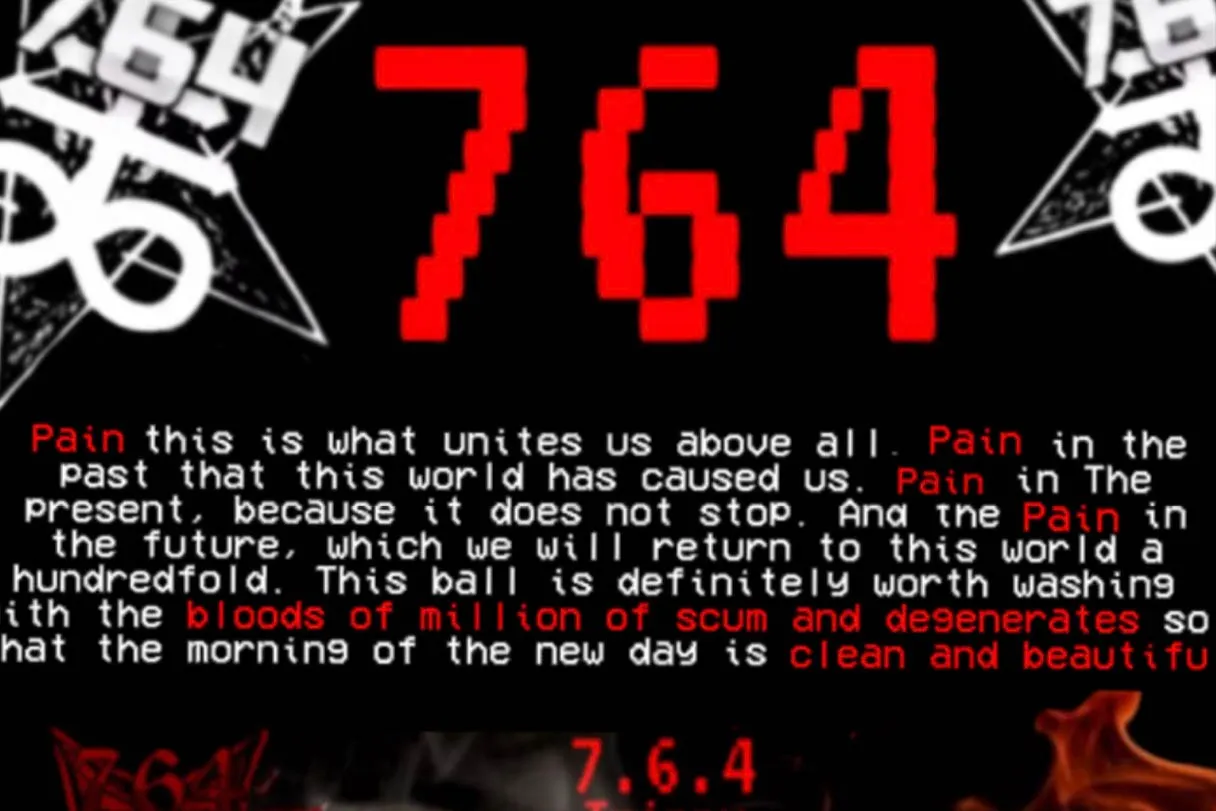
However, most of the NVEs that have dominated headlines over the last few years are not full egregores. Grooming and sextortion networks like 764 are predatory in the most literal sense, with mechanics closer to organized abuse than an organic belief system, and they matter here because they show what’s required when a system can’t recruit on its own. They are mostly grown through the actions of “handlers,” older members who actively coerce and escalate others, and there’s a worrisomely well-established set of rituals for doing what they do.
In many cases, handlers systematically target minors who are already struggling with depression, eating disorders, and self-harm. Institute for Strategic Dialogue analysts have documented 764 members connecting with victims through online groups predominantly made up of teenagers looking for meaning, often in moments of profound vulnerability—and for every NVE story that ends in death or murder, there are many more that end in unseen but exacerbated adolescent mental health crises and self-harm. There’s a reason so many investigators consistently describe the instances of real-world violence attributed to these systems as “the tip of the iceberg.”
In an August 2025 article about a boy NPR identifies as Elliott, the details are painfully ordinary. At fourteen, just as he was entering high school, his longtime friend group was breaking apart, and his parents were separating. With a new smartphone and school-issued laptop, he went looking for community—specifically, in online spaces focused on black metal music. This is where a group of predators associated with a 764-style network found him. Then, he started sliding. Within months, he was parroting accelerationist ideology and going on anti-LGBTQ+ tirades that were completely out of character for a kid whose own friend group and family included trans and nonbinary people, alternating between talking about wanting to start “an order” and claiming there was no meaning to anything. His mother described the whole period as watching her son get “taken hostage and brainwashed.” Fortunately, after his sister tipped his mom off that he’d ordered a large hunting knife online, she was able to stage an intervention and get Elliott back.
While stories like these represent a succession of hundreds of social and material failures, they start with the same universal adolescent experience that led me to Warhammer: the need for significance. What found Elliott wasn’t the same thing that found me—it was inherently social, immediate, and predatory in ways that a store window full of plastic figurines could never be—but the longing was still longing.
Still, for all the well-documented horror of 764, the most worrisome question is not what the system does, but what a similar system could do if it weren’t constrained by this need for one-to-one human connection. In 764-style networks, the system's growth depends on individual handlers manipulating individual kids. There are some more parallels here to my first day at the Toy Soldier, and the charismatic intervention of the store’s cashier—but the thing that kept me coming back after that day was all the box art. If a pure egregore is a system that can recruit and shape minds through aesthetic invitation alone, 764 doesn’t fit the bill. Saints Culture does.
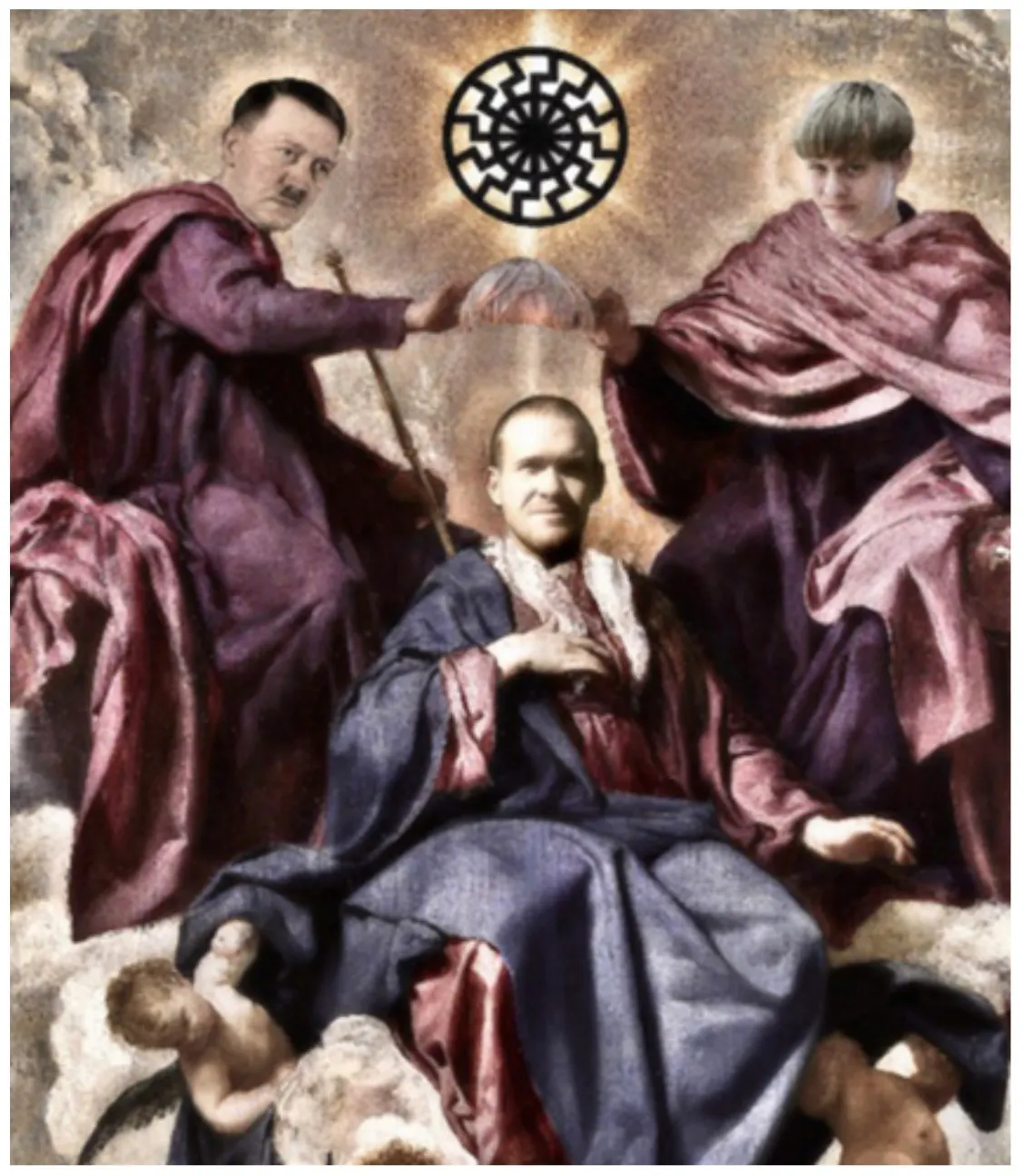
Saints Culture emerged in the late 2010s within far-right accelerationist communities on Telegram. It’s a subculture where mass killers—mostly white supremacist terrorists—are venerated as saints. Manifestos are treated as sacred texts, birthdays and attack dates are commemorated on Saints Calendars, and the likenesses of specific killers are rendered in the style of Christian iconography. The subculture also borrows heavily from the world of gaming: leaderboards rank killers by body count, and hype videos set footage of attacks to uptempo electronic music. The entire system is engineered so that someone can instantly understand what it values, rewards, and what it wants them to become, without anyone ever having to explain it. Every kid absorbing its iconography online right now is doing the same work I was doing for Warhammer after my first day at the Toy Soldier.

This is what makes Saints Culture so uniquely caustic, even to those who are never actually spurred to real-world violence. The process of entering the system is thoroughly individual and meaning is made without mediation, which means that there are no mentors to be held accountable for whatever it does to you. Once you’re in, the system starts to show you what other private believers have done. Emulation happens in the total absence of any coherent community, through a kind of parallel outbidding between individuals who never meet or interact. Before Robin Westman murdered two children and injured eighteen others at the Annunciation Catholic Church in Minneapolis, she scrawled the names of about fifteen mass shooters and terrorists on her weapons and magazines, alongside a particularly telling reference to ongoing Terrorgram debates about a higher body count threshold for Sainthood: “more than ten.” It’s hard not to read details like these the same way I read the rules about Orks painting their vehicles red.



Warhammer and Saints Culture are both generative systems with lore, a consistent aesthetic, community practices and a participatory architecture that rewards contribution and elaboration. Both are also capable of recruiting through aesthetic invitation alone—presenting would-be believers with a multitude of tantalizing gaps. How much that invitation gives you to work with is another story: Warhammer’s gaps can be filled with anything that doesn’t break its “yes, and” logic, but Saints Culture’s gaps can only be filled with death. While would-be Warhammer content creators are free to crib from just about anything sci-fi or fantasy adjacent, it’s hard to build Saints Culture content around broader abstractions like a specific ideal of masculinity or a shared feeling of alienation. The only people who get a place on the Saints Calendar are mass murderers and terrorists.
This distinction finds a mirror in the places where Warhammer and Saints Culture take inspiration. Both borrow heavily from the aesthetics of a far older and more successful system, and they’re not alone in doing so. Christianity has inspired centuries of art, music, philosophy, and Church-sanctioned torture and murder. But in the vast constellation of the Christian tradition, the glorification of violence is just one star. Warhammer takes that star and fixes it in a constellation of its own, alongside other points of reference like The Lord of the Rings and Dune. But in Saints Culture, it’s the sun that everything revolves around. Heterogeneous generative systems that give imaginative labor multiple places to go aren’t inherently dangerous. Homogeneous generative systems that only metabolize one thing—and only point one way—are.
In systems like Warhammer, you’re free to fill in the gaps with whatever you arrive with. The lore rewards continued investment, giving you new stories and new ways of seeing the world in exchange for the imaginative energy you put in. But in systems like Saints Culture, imaginative labor can only be resolved by glorifying and pursuing high-resolution real-world violence. A kid approaching Saints Culture for the first time encounters something structurally identical to what I felt in front of that display case: an aesthetic system so vibrant and internally coherent that it speaks entirely for itself. The trouble is, the gaps don’t lead anywhere. You don’t build a mythology so much as hollow yourself out in service of one.
Egregores draw considerable power from a silent majority of private believers. The question is which system finds you first—and then, what it builds in you, or takes out of you.

What Warhammer gave me
If there’s one thing I learned while writing this piece, it’s that I have the same problem with egregores that I’ve always had with Warhammer. When writing about something so loaded, is it better to skew more detached academic or wide-eyed true believer? I tried versions where I went all-in on phrases like ‘nonmaterial psychic thoughtform,’ and others where I restrained myself to the world of “systems,” but I left both registers in here because my inability to choose between them is the exact phenomenon I’m describing. My impulse to reach for all of this esoteric vocabulary in the first place wasn’t purely analytical. On my first day at the Toy Soldier, I wanted the world to have a secret third thing. Now, I keep finding myself drawn toward vocabulary that points toward the existence of one—and it’s hard for me to dismiss that slippage as a failure of writerly discipline. It’s the same longing that got me here in the first place, still humming along.
I’m pleased to report that the Toy Soldier still exists, though I’ve only contributed about $300 to their bills over the last two decades—mostly in the form of magazines and paperback novels. I’m not alone there, either; visit in 2026, and you’ll find that half of the store has been given over to actual kids’ toys for the wealthy young families that have exploded out of the Boston-Cambridge-Somerville Tech and Finance Containment Zone into surrounding suburbs in the years since COVID. The last time I stopped by in the fall of 2024, I found the space I’d always known as the Warhammer Fantasy section replaced by a huge rack of frisbees, and felt overwhelmed with the sudden urge to cry.
Part of me would give anything for a photograph of the store’s Warhammer 40k section as I first encountered it, but the rest of me knows better. Memory has a way of filling in its own gaps, and it’s hard to build a religion around a single afternoon without taking some notes. But if I could see that store again, it would hit the egregore right in its glowing red weak point. My idea of that first day at the store is inextricably tied to my idea of Warhammer—and now, to my idea of what it may have kept me from. Which is exactly what a nonmaterial psychic thoughtform that’s been shaping my perception of itself for twenty years would want me to think.